
Showing posts with label POLITICS. Show all posts
Showing posts with label POLITICS. Show all posts
Wednesday, 11 August 2010
What???, Fernando Collor como Governador...No comments about!!!

Wednesday, 4 August 2010
Wednesday, 7 July 2010
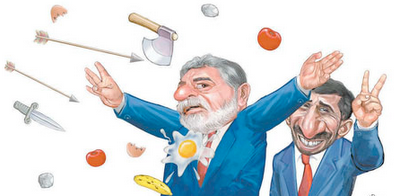
Pouca-vergonha

A Polícia Federal apurou desvio de cerca de R$ 700 milhões em 303 obras públicas no Brasil. A denúncia é de extrema gravidade
por João Doria Jr.
A denúncia do jornal “Folha de S. Paulo” é de extrema gravidade. A cada R$ 10 periciados pela PF, R$ 3 foram desviados para a propinagem. Rodovias, aeroportos, saneamento, pavimentação e portos. Obras deste quilate garantiram aos corruptos e corruptores quase R$ 1 bilhão de superfaturamento. Só no aeroporto de Goiânia, o relatório da PF registrou desvio de R$ 48 milhões. Triste o país que convive com tanta corrupção. Desviar recursos, afrontar o contribuinte e desafiar a opinião pública virou o esporte preferido de muitos políticos. Mas todo roubo acaba sendo flagrado algum dia. Não é mesmo, governador José Roberto Arruda? Os que acreditam na impunidade, não perdem por esperar.
Source by Isto é Dinheiro - Nº edição: 649 | 12.MAR -
Sunday, 28 February 2010
Video- David Cameron: ‘Conservatives are tolerant, compassionate and modern’

Conservative Party leader David Cameron has delivered a key note speech at the party’s spring forum in Brighton. Although he made no direct reference to LGBT (lesbian, gay, bisexual, transgenered) issues, he did attempt to portray the party as modern, tolerant and compassionate.
Mr Cameron’s speech came on the same day that a poll for the Sunday Times showed that the Tories have the slimmest lead over Labour for two years. The YouGov research places the Conservatives on 37% and Labour at 35%. A quirk in the first past the post system means that the Conservatives need to have a nine per cent lead over Labour in order to form a majority in the House of Commons. However, Tory polling indicates that progress in the key marginal constituencies are not reflected in national polls.
Mr Cameron told delegates: “What sort of party are we? You decided that four-and-a-half years ago when you elected me as your leader.
“We decided then that we wanted to modernise our party to get back in touch with the country that we wanted to govern.
“I didn’t do that on my own, you did it.”
He added: “We can now look the British people in the eye and say this country, our country, this tolerant, compassionate, brilliant multi-racial country, we are like you, we are for you and we are ready to serve you. This modern Conservative party has made its choice and it is never going back.”
Over the years of Mr Cameron’s leadership, the Conservative party has been at great pains to improve its perception among the gay community as well as with other minority groups. There is one gay member of the shadow cabinet, Nick Herbert and a number of other high profile gay Tories including shadow prisons minister, Alan Duncan.
Mr Cameron added: “We have got to inspire people with the potential of what we can be in this country and how optimistic we are that if we take the country on this journey we can achieve it.”
“We need to give people a sense that if we make these difficult decisions we will say ‘Yes we did these
difficult things but we came through it together.’
“We need to give people a sense that being a citizen is not just about paying your taxes and obeying the law – it is about being part of something bigger than yourself.
“A sense that when you are growing up in your country you really are part of a big and rich and vibrant society.
“I want us to be a country that fells like a community – that is what our optimistic ambitions should be all about.”
Mr Cameron labeled anti-gay British National Party (BNP) leader Nick Griffin as a “ghastly piece of filth ”
The party leader warned his members: “They don’t hand general election victories and governments on a plate to people in this country, and quite right too.
“This election was always going to be close, this election was always going to be a real choice – Labour or Conservative, Gordon Brown or me.
“And this election was always going to be a real fight for our party, a fight to make sure we serve the country we love and that is the fight that we are going to have.”
In a speech delivered without an auto-cue, Mr Cameron said: “It is an election that we have to win because our country is in a complete mess and it is our patriotic duty to turn it around and give this country a better future.
“I think everyone in this country knows that another five years of Gordon Brown would be a disaster for our country.
“Another five years of spending and bloat and waste and debt and taxes. Another five years of failing to get to grips with our big social problems, another five years and the politics of that big top-down, bossy ‘I know best’ sort of approach and another five years of a Government that is so dysfunctional, so divided, so weak.
“You have got a bunch of ministers that can’t work with him but can’t get rid of him, you have got a Prime Minister who can’t work with them and can’t make his Government work.
“They are just locked in this dangerous dance of death that is dragging our whole country down and it is only the Conservative Party that can give people the hope of a different future.
“As we leave this conference today we must resolve: ‘We will not let you down.”‘
The economy
Mr Cameron turned to the economy and questioned whether Prime minister Gordon Brown is really an economic “genius.”
“What sort of genius is it that doubles the national debt? What sort of genius is it that takes one of the best pension systems in the world and wrecks it?” he said
“That’s not genius, that’s incompetence and at this coming election we are going to out your (Mr Brown’s) record and tear it apart piece by piece.”
“I want a really clear message to go out that Britain is under new economic management and we are open for business again,” he said.
Mr Cameron went on to say: “People I think really understand that the economic changes we are going to have to make to deal with our deficit will be tough and will be hard and they don’t want that hidden from them.
“I think people know that the changes we need to make in our society will be difficult and we will have to confront some really deep vested interests and frankly the same goes for turning round our politics.
“When I say we need to be frank about Britain’s problems, I mean all of them.
“We have got an energy crisis looming and we need to tell people that if we don’t invest in some extra capacity now the lights are going to go out.
Immigration
“People want us to be frank about the issue of immigration. It has been too high for too long and it needs to be cut and I will cut it,” Mr Cameron said.
“We have set out reasonably, sensibly, calmly how that will be done.
“As well as frankness I think people are right to expect radicalism. Let’s be frank about it.
Schools
“We are not going to turn around the performance of our schools and our education system unless we are radical from day one. We are not going to sort the welfare system and make sure it genuinely helps people, that doesn’t allow you to live an idle life through choice unless we are radical.
“People want to hear that from us.”
“With all our difficulties and the deficit and the debt and the social problems and the political system that has gone so wrong, it can feel like we are looking down some dark tunnel.
“But there is a bright light at the end of it.”
“Imagine what it would be like that instead of having so many sink schools we have got the best state schools in Europe that people will really want to send their children to.
“Imagine if instead of a country where we have got a closed sign over our economy it is the best place again to do business, to invest, to set up, to get things moving again.
Gordon Brown
“Every day Gordon Brown is running this country is a grey day for Britain.
“Every day he is in charge is another day we are not gripping our problems, another day of wasted opportunities, another day when this country is not being all it could be.
“And while you do it I want you to think of the incredible dark depression of another five years of Gordon Brown and say ‘No. No we are not going to do that.
“So come on then – let’s get out there and win it for Britain.”
Liberal Democrat response
Lib Dem ome affairs spokesman Chris Huhne said: “I thought he was surprisingly nervous. Clearly the party has been shocked, and perhaps he and his team have been shocked, by the fall in the poll ratings.
“Perhaps they had started to take that a bit for granted.”
Labour response
Work and Pensions Secretary Yvette Cooper told the BBC: “I found it wanting. People aren’t going to be fooled by some platitudes or spin.
“They want to know what the substance is behind it.”
Source by Staff Writer, PinkNews.co.uk
Saturday, 27 February 2010
G1: ‘Alexandre, o Grande, era homossexual e a tropa obedecia’, diz ex-sargento gay

O ex-sargento do Exército Fernando de Alcântara Figueiredo, envolvido no primeiro caso assumido de um casal gay na história das Forças Armadas brasileiras, afirmou que o general Raymundo Nonato de Cerqueira Filho, indicado ao Superior Tribunal Militar, fez uma declaração “retrógrada e infeliz” sobre os homossexuais e que “está muito mal informado” – confira ao lado entrevista concedida por Figueiredo à Globo News
Ao G1, Fernando de Alcântara Figueiredo rebateu: “Isso mostra que ele desconhece a história. Alexandre, o Grande, era homossexual e a tropa obedecia. Trabalhei 15 anos nas Forças Armadas e nunca fui desrespeitado”, afirmou. Alexandre, o Grande, foi rei da Macedônia há mais de 2.300 anos e é lembrado por sua habilidade em estratégias militares por ter comandado uma das maiores expansões territoriais do mundo antigo. Algumas fontes históricas e filmes sobre a época relatam a homossexualidade de Alexandre.
O ex-sargento Figueiredo , que chegou a ser preso e responde a processo após assumir sua sexualidade enquanto atuava no Exército, disse que enviará manifestação ao presidente Luiz Inácio Lula da Silva e à Comissão de Constituição de Justiça do Senado para evitar que o general seja nomeado para o tribunal.
Para Figueiredo, a declaração do general mostra que ele “não tem qualificação para ser juiz”. “A primeira coisa para esse cargo é a imparcialidade e o respeito à pessoa humana e outra qualificação é não ser preconceituoso. Isso poderia ter sido voltado contra negros, ou pessoas com deficiência.”
Figueiredo pediu para sair do Exército em julho de 2008. Atualmente, é integrante da ONG Tortura Nunca Mais e do Instituto Ser, que visa defender os direitos do homossexual.
Ele afirmou que há diversos casos de homossexualismo nas Forças Armadas, mas os militares temem assumir. “Meu caso e o de Laci não é específico e isolado, tem várias demandas desse tipo e precisamos trazer isso para a sociedade, que a intransigência é coisa comum nas Forças Armadas. (…) Numa situação de batalha, o meu sangue como homossexual é tão importante quanto o de um heterossexual. O que dita o caráter não é a vida íntima. É muita hipocrisia. Eu mesmo conheço generais que são homossexuais.”
Figueiredo apareceu ao lado de seu companheiro, Laci de Araújo, na Revista “Época” em 2008, quando os dois assumiram que mantinham um relacionamento homossexual . Laci foi acusado de deserção por ter ficado mais de uma semana longe do trabalho e foi preso, mas atualmente está trabalhando no Exército.
Declaração
O general Cerqueira Filho, autor da declaração polêmica, foi indicado para ocupar uma vaga de ministro do Superior Tribunal Militar (STM). Na terça, ele participou de audiência na Comissão de Constituição e Justiça do Senado. Cerqueira Filho e o almirante Álvaro Luiz Pinto, também indicado a uma vaga no STM, participavam da audiência quando foram questionados pelo senador Demóstenes Torres (DEM-GO) e Eduardo Suplicy (PT-SP) sobre o tema.
“Vossas excelências são favoráveis ao ingresso de homossexuais em qualquer das forças e acham que essa polêmica tem razão de ser?”, indagou Demóstenes. Suplicy quis saber se os dois militares defendiam a exclusão de homossexuais das Forças Armadas.
Em sua resposta, o general Cerqueira Filho disse que iria responder “de uma maneira sincera”. “Não é que eu seja contra o homossexual, cada um tem que viver sua vida. Entretanto, a vida militar se reveste de determinadas características que, em meu entender, tipos de atividades que, inclusive em combate, pode não se ajustar ao comportamento desse tipo de indivíduo”, afirmou.
Estados Unidos
A polêmica sobre homossexuais nas Forças Armadas não é exclusividade brasileira. Nos Estados Unidos, o tema está em discussão no governo. O secretário de Defesa do país, Robert Gates, disse nesta terça-feira diante do Senado que um grupo de trabalho vai estudar a possível anulação de uma lei de 1993 que proíbe o ingresso de homossexuais nas Forças Armadas do país.
via G1
Source by http://gay.com.br, Kobakobamaru (youtube)
Friday, 26 February 2010
Obama healthcare summit fails to reach accord
A day-long televised healthcare summit in Washington hosted by President Barack Obama has ended without a deal to break the deadlock between parties.
Mr Obama outlined his reform plan but Republicans said it was not acceptable and called for a fresh start.
The president and his allies want to expand health coverage to include millions of uninsured Americans.
Republican Senate minority leader Mitch McConnell said he was "discouraged by the outcome" of the summit.
He said it was "pretty clear" that Democrats and Mr Obama wanted to revive the healthcare bill passed by the Senate last December but now stalled in Congress.
"I do not believe there will be any Republican support for this 2,700 page bill," Mr McConnell said.
'Step closer'
House Speaker Nancy Pelosi said the Democratic Party would continue its campaign for healthcare reform.
"Those people who are struck will illness or pre-existing [health] conditions... want us to act, they want results," she said.
"We need to have the courage to get this job done, and we will. I think today took us a step closer to improve healthcare, to lower costs and to make it much more accessible to many more Americans."
The president had urged 40 Republicans and Democrats to avoid political theatre and focus on areas where they agreed.
He wants them to back the latest version of his $950bn (£621bn) plan to cover uninsured Americans, cut abuses by the health insurance industry and lower premiums.
Republicans say that the country cannot afford President Obama's plans and they want him to start again from scratch.
The stage is now set for a showdown in which the Democrats may use a controversial parliamentary procedure to force their plans through, says the BBC's Paul Adams in Washington.
The meeting - which began at 1000 (1500 GMT) - debated controlling costs, insurance reforms, deficit reduction and expanding coverage.
A long and often riveting day did little to break the deadlock, reports our correspondent, and healthcare reform, which everyone wants, is no closer as a result.
The two sides clashed, mostly politely but sometimes angrily, over a host of technical and philosophical differences.
The White House has signalled it may end up driving through a bill using a procedure called budget reconciliation, which only needs a simple majority of 51 votes in the Senate.
Mr Obama said Americans wanted a final vote on healthcare. "I think that most Americans think a majority vote makes sense," he said.
Analysts say that was a hint he may drive the reform bill through Congress.
The reform plan is currently blocked as the Democrats no longer have the 60-seat majority required to thwart Republican obstruction tactics.
Partisan battle
The contentious debate was plagued by partisanship: even the shape of the table for the debate at Blair House, opposite the White House, was the subject of dispute.
President Obama, Vice-President Joe Biden and other leading Democrats sparred with senior Republicans, including Mr McConnell and Arizona Senator John McCain.
Mr Obama opened the debate by emphasising that everyone present understood the importance of the healthcare issue, adding that there were significant points of potential agreement between the two parties on healthcare reform.
"We all know this is urgent and unfortunately, despite all the negotiations that have taken place, it became a very ideological battle; it became a very partisan battle where politics ended up trumping common sense," he said.
He added that he wanted to avoid the televised session becoming merely political theatre, hoping that those involved would work together to try to solve the problem.
"If we keep an open mind and are not trying to score political points then we may be able to make some progress," he said.
Republican Senator Lamar Alexander responded by saying that in order for Mr Obama to succeed on healthcare, he should scrap the health care bill that Senate Democrats passed in December, and start afresh with a clean sheet of paper.
"If we can start over, we can write a healthcare bill," he said. "It means working together... reducing healthcare costs... and going step-by-step to regain the trust of the American people."
Republican Senator Jon Kyl went on to argue that Democratic efforts to overhaul the current system would give Washington too much control over healthcare.
"There are some fundamental differences between us here that we cannot paper over," said Mr Kyl. "We do not agree about the fundamental question about who should be mostly in charge.
Cost of reforms?
The BBC's Mark Mardell in Washington says that while the president chaired the meeting firmly, trying to drag the Republicans into a concrete debate on detailed issues, there was almost no chance of the Republicans agreeing to anything that was on the table.
The House of Representatives and the Senate passed separate healthcare bills at the end of last year.
But efforts to merge them and sign a bill into law collapsed last month when Republicans won a special election in Massachusetts.
The victory deprived Democrats of their crucial filibuster-proof 60-seat Senate majority.
Republicans used Thursday's talks to highlight the cost of the Democrats' reforms, while outlining their own more scaled-back approach.
Democrats are expected to seek to portray the Republicans' plans as inadequate.
'Photo op'
The president has invested much political capital in his plans to make nearly all Americans take out health insurance and to stop abuses by insurance firms.
But the issue has become a rallying standard for conservatives, who say Mr Obama is bent on introducing European-style big government.
It has also worried a recession-mauled American public, which is not clear about how much reforms would cost them.
The US is the world's richest nation and the only industrialised democracy that does not provide healthcare coverage to all its citizens.
SOURCE BY BBC News and www.whitehouse.gov/
Mr Obama outlined his reform plan but Republicans said it was not acceptable and called for a fresh start.
The president and his allies want to expand health coverage to include millions of uninsured Americans.
Republican Senate minority leader Mitch McConnell said he was "discouraged by the outcome" of the summit.
He said it was "pretty clear" that Democrats and Mr Obama wanted to revive the healthcare bill passed by the Senate last December but now stalled in Congress.
"I do not believe there will be any Republican support for this 2,700 page bill," Mr McConnell said.
'Step closer'
House Speaker Nancy Pelosi said the Democratic Party would continue its campaign for healthcare reform.
"Those people who are struck will illness or pre-existing [health] conditions... want us to act, they want results," she said.
"We need to have the courage to get this job done, and we will. I think today took us a step closer to improve healthcare, to lower costs and to make it much more accessible to many more Americans."
The president had urged 40 Republicans and Democrats to avoid political theatre and focus on areas where they agreed.
He wants them to back the latest version of his $950bn (£621bn) plan to cover uninsured Americans, cut abuses by the health insurance industry and lower premiums.
Republicans say that the country cannot afford President Obama's plans and they want him to start again from scratch.
The stage is now set for a showdown in which the Democrats may use a controversial parliamentary procedure to force their plans through, says the BBC's Paul Adams in Washington.
The meeting - which began at 1000 (1500 GMT) - debated controlling costs, insurance reforms, deficit reduction and expanding coverage.
A long and often riveting day did little to break the deadlock, reports our correspondent, and healthcare reform, which everyone wants, is no closer as a result.
The two sides clashed, mostly politely but sometimes angrily, over a host of technical and philosophical differences.
The White House has signalled it may end up driving through a bill using a procedure called budget reconciliation, which only needs a simple majority of 51 votes in the Senate.
Mr Obama said Americans wanted a final vote on healthcare. "I think that most Americans think a majority vote makes sense," he said.
Analysts say that was a hint he may drive the reform bill through Congress.
The reform plan is currently blocked as the Democrats no longer have the 60-seat majority required to thwart Republican obstruction tactics.
Partisan battle
The contentious debate was plagued by partisanship: even the shape of the table for the debate at Blair House, opposite the White House, was the subject of dispute.
President Obama, Vice-President Joe Biden and other leading Democrats sparred with senior Republicans, including Mr McConnell and Arizona Senator John McCain.
Mr Obama opened the debate by emphasising that everyone present understood the importance of the healthcare issue, adding that there were significant points of potential agreement between the two parties on healthcare reform.
"We all know this is urgent and unfortunately, despite all the negotiations that have taken place, it became a very ideological battle; it became a very partisan battle where politics ended up trumping common sense," he said.
He added that he wanted to avoid the televised session becoming merely political theatre, hoping that those involved would work together to try to solve the problem.
"If we keep an open mind and are not trying to score political points then we may be able to make some progress," he said.
Republican Senator Lamar Alexander responded by saying that in order for Mr Obama to succeed on healthcare, he should scrap the health care bill that Senate Democrats passed in December, and start afresh with a clean sheet of paper.
"If we can start over, we can write a healthcare bill," he said. "It means working together... reducing healthcare costs... and going step-by-step to regain the trust of the American people."
Republican Senator Jon Kyl went on to argue that Democratic efforts to overhaul the current system would give Washington too much control over healthcare.
"There are some fundamental differences between us here that we cannot paper over," said Mr Kyl. "We do not agree about the fundamental question about who should be mostly in charge.
Cost of reforms?
The BBC's Mark Mardell in Washington says that while the president chaired the meeting firmly, trying to drag the Republicans into a concrete debate on detailed issues, there was almost no chance of the Republicans agreeing to anything that was on the table.
The House of Representatives and the Senate passed separate healthcare bills at the end of last year.
But efforts to merge them and sign a bill into law collapsed last month when Republicans won a special election in Massachusetts.
The victory deprived Democrats of their crucial filibuster-proof 60-seat Senate majority.
Republicans used Thursday's talks to highlight the cost of the Democrats' reforms, while outlining their own more scaled-back approach.
Democrats are expected to seek to portray the Republicans' plans as inadequate.
'Photo op'
The president has invested much political capital in his plans to make nearly all Americans take out health insurance and to stop abuses by insurance firms.
But the issue has become a rallying standard for conservatives, who say Mr Obama is bent on introducing European-style big government.
It has also worried a recession-mauled American public, which is not clear about how much reforms would cost them.
The US is the world's richest nation and the only industrialised democracy that does not provide healthcare coverage to all its citizens.
SOURCE BY BBC News and www.whitehouse.gov/
Thursday, 25 February 2010
Gordon Brown promises gay people they 'will not have to walk alone'

Gordon Brown hosted an LGBT reception
Prime minister Gordon Brown paid tribute last night to gay and lesbian members of the armed forces at a reception to mark the contribution of the LGBT community for Britain.
He told guests at 10 Downing Street, including a number of gay servicemembers, that there was a "debt of gratitude we can never fully repay".
He said that the pride they felt was "nothing compared to the pride we feel in them".
Mr Brown cited the current struggle in the US to repeal Don't Ask, Don't Tell, which bans gays and lesbians from serving openly in the military, saying he knew debate on the issue continued.
In 2009, for the first LGBT reception at Downing Street, Mr Brown said that the ban on gay marriage in California was "unacceptable".
This year marks the tenth anniversary of the British military allowing out gay soldiers.
Mr Brown said: "I promise you that no one need walk the road to equality alone again."
He also listed the achievements made for gay equality in the last ten years, such as gay adoption and fertility rights for lesbians, saying people had warned these things could not be done.
In the short speech, Mr Brown mentioned Liverpool policeman James Parkes, who was seriously injured last year in a homophobic attack.
Mr Parkes, who has recovered, was at the event with his new husband Tom.
Mr Brown's wife Sarah spent several hours speaking to guests.
Others there included Paul O'Grady, Dr Christian Jessen and artist Maggi Hambling.
Author Jeanette Winterson also turned up with partner Susie Orbach.
Source By Jessica Geen • Pink News
Sunday, 21 February 2010
Brazil's ruling party endorses female sucessor to Lula

Brazil's ruling left-wing party has endorsed chief minister Dilma Rousseff as its candidate for presidential elections in October. President Luiz Inacio Lula da Silva cannot run for a third term under the country's constitution.
REUTERS - President Luiz Inacio Lula da Silva's chief of staff on Saturday vowed to continue Brazil's investor-friendly economic policies if she won the Oct. 3 presidential race as the ruling Workers' Party candidate.
Speaking to the party's national convention in Brasilia after it formally endorsed her candidacy, Dilma Rousseff, 62, said she would maintain fiscal discipline, a free-floating exchange rate, and inflation targets -- the pillars of Lula's economic strategy.
"We will ensure macro-economic stability," Rousseff, a trained economist, told the party's delegates in the capital Brasilia. She added that she felt "totally prepared" to govern the country.
She would become the country's first female president, though two opinion polls released this month show her trailing conservative Sao Paulo state Governor Jose Serra of the opposition PSDB party by between 5 percent and 11 percent.
Lula, the most popular president in Brazil's recent history but prevented by law from running for a third consecutive term, said Rousseff's candidacy was not designed to hold his place for a possible return in 2014.
"I want her to win a second mandate," said Lula, a former union leader who virtually imposed Rousseff's candidacy on the Workers' Party that he founded 30 years ago. He said he chose her for her rigor, ethics and determination.
Brazil has during Lula's rule consolidated its position as one of the world's leading economies. It bounced back quickly from a brief recession last year and its economy is expected to grow by more than 5 percent this year.
The Workers' Party on Friday approved a campaign platform that proposes extending Lula's economic policies. But it also included proposals to expand the role of state enterprises, tax big wealth and expand social welfare programs.
Rousseff told chanting supporters that, as president, she would continue to expand the civil service despite warnings by opposition parties of the rising costs of maintaining a bloated and inefficient state bureaucracy.
Women vote
Lula, a union leader who rose from humble, working-class roots to the presidency, urged Brazilian women to support Rousseff in the election in an effort to battle deep-seated gender inequality in a country where few women have risen to high political office.
"Women are still treated like second-class citizens," Lula said.
His appeal resonated with some of the 3,000 delegates and others in attendance at the convention.
"It's high time for a woman president," said Cibele Figuereido, a 50-year old teacher and Rousseff supporter.
While an all-female percussion group gyrated its way through the flag-waving audience after Rousseff's speech, a small group of tattooed natives in traditional headdress protested against the government's Indian policy.
Rousseff must step down from her current post by April 3 in compliance with electoral law and will then have to negotiate with as many as 10 potential allied parties to forge a common campaign platform.
She said she wanted to continue working with Lula's current coalition, a group of 11 parties ranging from the far left to the political center.
"I want to form a government coalition," said Rousseff, who was a left-wing guerrilla militant during the country's 1964-85 military dictatorship.
Some analysts, however, say she lacks Lula's political savvy to manage often volatile party interests.
Unlike the folksy Lula, Rousseff is generally seen as uncharismatic and prone to technocratic speech, which pollsters say could lose her votes in a country where a candidate's personality may outweigh campaign issues.
"I think the biggest obstacle Dilma will face is that she lacks the ability to communicate with the people," said Romulo Carneiro, town mayor in the northeastern Ceara state.
Source by News Wires (text)/France24-News
Obama's promise and Obama's action...
Visit msnbc.com for breaking news, world news, and news about the economy
He's Smart, he's Educated,he's Intelligent...but a lot of people still furious at the gap between Obama's promise and Obama's action!
Source by MSNBC TV VIDEOS
Saturday, 20 February 2010
Congresso do PT oficializa Dilma como pré-candidata à Presidência
Filiados e delegações do Partido dos Trabalhadores de todo país confirmaram neste sábado (20) a indicação da ministra-chefe da Casa Civil, Dilma Roussef, como pré-candidata única do PT ao Planalto nas eleições deste ano. O referendo aconteceu no terceiro dia do 4º Congresso do Partido dos Trabalhadores, que acontece em Brasília.

A chegada da ministra foi aplaudida de pé pelos mais de 1.300 pessoas. Na cerimônia, antes de Dilma ser convidada a subir no palco, foi realizada uma rápida apresentação musical, enquanto um grupo de mulheres montava um arranjo com flores do Cerrado, no estilo japonês, ikebana.
O presidente da Câmara dos Deputados e do PMDB, Michel Temer, participou do encontro. Ele chegou ao lado do presidente Luiz Inácio Lula da Silva e da primeira-dama, Marisa Letícia. O presidente do PCdoB, Renato Rabelo, também estava presente.
"Foi me dada uma tarefa extremamente difícil: vir aqui para convencer vocês a votar na Dilma", disse Lula, irônico.
A mesa do evento foi composta pelo vice-presidente, José Alencar, ministros, senadores, governadores, representantes da Une (União Nacional dos Estudantes), Contag (Confederação Nacional dos Trabalhadores na Agricultura), CUT (Central Única dos Trabalhadores) e a Central dos Movimentos Populares.
A apresentação da candidatura sem concorrência interna repete a receita de 2006, quando não havia dúvidas de que o presidente Luiz Inácio Lula da Silva sairia novamente pela legenda para apostar na reeleição.
No que se refere à rejeição do eleitorado à ideia de Dilma como candidata, a última pesquisa da CNT/Sensus identificou que este índice caiu: em novembro passado era de 34,4%, e em janeiro apontava 28,4%. Segundo o levantamento, houve uma redução pela metade na diferença entre ela e o possível pré-candidato do PSDB, o governador de São Paulo, José Serra: de 10,1% em novembro para 5,4% em janeiro. O tucano registrou 33,2% e a ministra teve 27,8% das intenções de votos na última pesquisa.
A candidata escolhida por Lula não terá de passar pelo mesmo que Lula viveu em 2002. Ele teve de ser submetido a uma prévia dentro do partido, em que concorreu com o senador por São Paulo, Eduardo Suplicy – que angariou cerca 15% dos votos.
Suplicy, que tem se envolvido em polêmicas nos últimos anos, foca no momento em uma outra briga: sair como pré-candidato ao governo de São Paulo. Podem fazer frente a ele nomes como o da ex-mulher e ex-prefeita de São Paulo, Marta Suplicy, do senador Aloizio Mercadante e do ex-ministro da Fazenda e deputado federal, Antônio Palocci. Também não estão descartados o ex-presidente da Câmara dos Deputados, Arlindo Chinaglia, o prefeito de Osasco, Emídio de Souza, e o ministro da Educação, Fernando Haddad.
Uma possibilidade ainda não rejeitada para ter apoio do partido em São Paulo é a do deputado da base aliada, Ciro Gomes (PSB-CE) que, em caso de apoiar a candidatura de Dilma em nível nacional, poderia ser o candidato do PSB para o governo paulista.
“Todos aceitaram a Dilma em consenso e, eu, em especial”, revelou o senador Eduardo Suplicy (SP). “Da minha parte, eu disse a Dilma Rousseff que compreendo os méritos que a fizeram ser a escolhida. E ela compreendeu a minha parte e o meu programa renda cidadã foi aprovado como emenda de aperfeiçoamento ao programa Bolsa-Família, pelo programa do PT”, completou.
O deputado federal José Genoíno, no entanto, ressaltou que “o programa do PT não é o programa de Dilma”, e sim parte dele.
Sobre a candidatura única, o deputado federal Ricardo Berzoini alegou que não houve inscritos e o consenso do partido fechou com o nome da ministra.
"Ela [Dilma] tem histórico de militância de esquerda, participou dos principais feitos do governo Lula. A candidatura única é uma mostra expressiva da unidade do PT”, defendeu Genoino.
Biografia
Mineira de Belo Horizonte, Dilma Vana Rousseff, ocupou a cadeira de ministra-chefe da Casa Civil desde a demissão de José Dirceu, em 2005, acusado de envolvimento no suposto mensalão pago por dirigentes do PT a parlamentares da base aliada do governo.
Ainda no governo Lula, foi ministra de Minas e Energia de 2003 a junho de 2005. Antes de filiar-se ao Partido dos Trabalhadores, em 2001, Dilma era do PDT. Nas décadas de 1980 e 1990 atuou no governo do Rio Grande do Sul, nas secretarias da Fazenda e de Energia, Minas e Comunicações, e nos governos de Alceu Collares (PDT) e Olívio Dutra (PT).
Na juventude, participou da luta armada contra a ditadura militar. Teve atuações como militante no Polop (Política Operária), no Colina (Comando de Libertação Nacional), e no VAR-Palmares (Vanguarda Armada Revolucionária Palmares). Foi torturada e ficou presa por quase três anos.
Source by Camila Campanerut Do UOL Notícias Em Brasíli

A chegada da ministra foi aplaudida de pé pelos mais de 1.300 pessoas. Na cerimônia, antes de Dilma ser convidada a subir no palco, foi realizada uma rápida apresentação musical, enquanto um grupo de mulheres montava um arranjo com flores do Cerrado, no estilo japonês, ikebana.
O presidente da Câmara dos Deputados e do PMDB, Michel Temer, participou do encontro. Ele chegou ao lado do presidente Luiz Inácio Lula da Silva e da primeira-dama, Marisa Letícia. O presidente do PCdoB, Renato Rabelo, também estava presente.
"Foi me dada uma tarefa extremamente difícil: vir aqui para convencer vocês a votar na Dilma", disse Lula, irônico.
A mesa do evento foi composta pelo vice-presidente, José Alencar, ministros, senadores, governadores, representantes da Une (União Nacional dos Estudantes), Contag (Confederação Nacional dos Trabalhadores na Agricultura), CUT (Central Única dos Trabalhadores) e a Central dos Movimentos Populares.
A apresentação da candidatura sem concorrência interna repete a receita de 2006, quando não havia dúvidas de que o presidente Luiz Inácio Lula da Silva sairia novamente pela legenda para apostar na reeleição.
No que se refere à rejeição do eleitorado à ideia de Dilma como candidata, a última pesquisa da CNT/Sensus identificou que este índice caiu: em novembro passado era de 34,4%, e em janeiro apontava 28,4%. Segundo o levantamento, houve uma redução pela metade na diferença entre ela e o possível pré-candidato do PSDB, o governador de São Paulo, José Serra: de 10,1% em novembro para 5,4% em janeiro. O tucano registrou 33,2% e a ministra teve 27,8% das intenções de votos na última pesquisa.
A candidata escolhida por Lula não terá de passar pelo mesmo que Lula viveu em 2002. Ele teve de ser submetido a uma prévia dentro do partido, em que concorreu com o senador por São Paulo, Eduardo Suplicy – que angariou cerca 15% dos votos.
Suplicy, que tem se envolvido em polêmicas nos últimos anos, foca no momento em uma outra briga: sair como pré-candidato ao governo de São Paulo. Podem fazer frente a ele nomes como o da ex-mulher e ex-prefeita de São Paulo, Marta Suplicy, do senador Aloizio Mercadante e do ex-ministro da Fazenda e deputado federal, Antônio Palocci. Também não estão descartados o ex-presidente da Câmara dos Deputados, Arlindo Chinaglia, o prefeito de Osasco, Emídio de Souza, e o ministro da Educação, Fernando Haddad.
Uma possibilidade ainda não rejeitada para ter apoio do partido em São Paulo é a do deputado da base aliada, Ciro Gomes (PSB-CE) que, em caso de apoiar a candidatura de Dilma em nível nacional, poderia ser o candidato do PSB para o governo paulista.
“Todos aceitaram a Dilma em consenso e, eu, em especial”, revelou o senador Eduardo Suplicy (SP). “Da minha parte, eu disse a Dilma Rousseff que compreendo os méritos que a fizeram ser a escolhida. E ela compreendeu a minha parte e o meu programa renda cidadã foi aprovado como emenda de aperfeiçoamento ao programa Bolsa-Família, pelo programa do PT”, completou.
O deputado federal José Genoíno, no entanto, ressaltou que “o programa do PT não é o programa de Dilma”, e sim parte dele.
Sobre a candidatura única, o deputado federal Ricardo Berzoini alegou que não houve inscritos e o consenso do partido fechou com o nome da ministra.
"Ela [Dilma] tem histórico de militância de esquerda, participou dos principais feitos do governo Lula. A candidatura única é uma mostra expressiva da unidade do PT”, defendeu Genoino.
Biografia
Mineira de Belo Horizonte, Dilma Vana Rousseff, ocupou a cadeira de ministra-chefe da Casa Civil desde a demissão de José Dirceu, em 2005, acusado de envolvimento no suposto mensalão pago por dirigentes do PT a parlamentares da base aliada do governo.
Ainda no governo Lula, foi ministra de Minas e Energia de 2003 a junho de 2005. Antes de filiar-se ao Partido dos Trabalhadores, em 2001, Dilma era do PDT. Nas décadas de 1980 e 1990 atuou no governo do Rio Grande do Sul, nas secretarias da Fazenda e de Energia, Minas e Comunicações, e nos governos de Alceu Collares (PDT) e Olívio Dutra (PT).
Na juventude, participou da luta armada contra a ditadura militar. Teve atuações como militante no Polop (Política Operária), no Colina (Comando de Libertação Nacional), e no VAR-Palmares (Vanguarda Armada Revolucionária Palmares). Foi torturada e ficou presa por quase três anos.
Source by Camila Campanerut Do UOL Notícias Em Brasíli
Friday, 19 February 2010
Government accused of U-turn over faith schools' teaching on homosexuality

The government has been accused of performing a U-turn over an amendment allowing faith schools to teach about homosexuality in line with their "religious character".
Last week, schools secretary Ed Balls tabled an amendment to the Children, Schools and Families Bill that would allow faith schools to teach sex education "in a way that reflects the school’s religious character".
The amendment was designed to make clear that equality requirements do not force governing bodies or heads to teach about issues such as homosexuality and contraception in a particular way.
The Catholic Education Service claims to have successfully lobbied for the amendment on its website.
Campaigners say this means faith schools will be permitted to teach that homosexuality is wrong and that contraception and abortion are sinful. Around a third of schools in England are faith schools.
Some have gone as far as to describe it as "the new Section 28′, in reference to the 1988 law which banned the "promotion" of homosexuality. It was repealed in 2003.
Chairman of the Accord Coalition, a group for inclusive education, Rabbi Dr Jonathan Romain said: "It is astonishing that the government plans to deny young people of their right to accurate, balanced PSHE [personal, social and health education] and sex and relationships education, and allow state funded schools to teach the subject from a particular religious viewpoint.”
“By taking this position, Ed Balls is implicitly condoning homophobia in schools and undermining attempts to tackle homophobic bullying. After Labour has done so much for equality, this looks like a 21st century Section 28 .”
The Pink Triangle Trust's secretary George Broadhead agreed, saying: "By taking this position, [the government] is implicitly condoning homophobia in schools and undermining attempts to tackle homophobic bullying. This looks like another Section 28.”
Andrew Copson, the chief executive of the British Humanist Association, added: "The government has U-turned on their commitment to young people, trading children's rights for the support of a minority religious lobby.
"We are deeply concerned that the government’s amendment effectively gives licence to faith schools to teach SRE [sex and relationships education] in ways that are homophobic, gender discriminatory and otherwise violate principles of human rights."
Liberal Democrat shadow schools secretary David Laws said the U-turn was "serious and undesirable".
Mr Laws added: “State-funded schools should not be free to put their own spin on sex and relationship education.
“The government should not pander in any way either to homophobia or to those who want young people kept in the dark when they are already exposed to these issues through the media well before the age of 16.”
According to the bill, schools should ensure that sex education “[is] appropriate to the ages of the pupils concerned and to their religious and cultural backgrounds”, “reflects a reasonable range of religious, cultural and other perspectives” and “emphasises the importance of both rights and responsibilities.”
A spokesman from the Department for Children, Schools and Families said that all schools would have to teach sex education when the new requirements came into law next year.
He told the Guardian: "All maintained schools will be required to teach full programmes of study in line with the principles outlined in the bill, including promoting equality and encouraging acceptance of diversity.
"Schools with a religious character will be free to express their faith and reflect the ethos of their school, but what they cannot do is suggest that their views are the only ones."
Source by Jessica Geen • February 19, 2010 - Pink News - UK
Sunday, 13 December 2009
NEW JERSEY: BRUCE SPRINGSTEEN POUR LE MARIAGE GAY ET LESBIEN

Alors que le Sénat et le Parlement du New Jersey (USA) sont sur le point d'examiner une proposition de loi visant à régulariser le mariage des personnes du même sexe, le chanteur Bruce SPRINGSTEEN est intervenu dans le débat pour rappeler son engagement en faveur de l'égalité des droits civiques et du mariage gay. Voici ce qu'on peut lire sur son site:
Like many of you who live in New Jersey, I've been following the progress of the marriage-equality legislation currently being considered in Trenton. I've long believed in and have always spoken out for the rights of same sex couples and fully agree with Governor Corzine when he writes that, "The marriage-equality issue should be recognized for what it truly is -- a civil rights issue that must be approved to assure that every citizen is treated equally under the law." I couldn't agree more with that statement and urge those who support equal treatment for our gay and lesbian brothers and sisters to let their voices be heard now
Comme beaucoup d'entre vous qui vivent au New Jersey, j'ai suivi l'évolution de la législation sur le mariage des personnes du même sexe qui est actuellement pris en considération à Trenton. J'en suis depuis longtemps partisan et j'ai toujours pris position pour les droits dse couples du même sexe, et je suis tout fait d'accord avec le gouverneur Corzine quand il écrit que "La question de l'égalité du mariage devrait être reconnue pour ce qu'elle est vraiment--une question de droits civiques qui doit être approuvée afin que chaque citoyen soit véritablement traité de manière égalitaire au regard de la loi." Je suis entièrement d'accord avec cette prise de position et presse ceux qui sont en faveur de l'égalité de traitement pour nos frères gays et nos soeurs lesbiennes pour faire en sorte que leurs voix soient entendues maintenant.
L'actuel gouverneur du New Jersey, Corzine, est démocrate et favorable aux unions des personnes du même sexe. Il y a urgence que le Parlement du New Jersey vote la loi, car le gouverneur Corzine est sortant et sera remplacé par un gouverneur républicain, Chris Christie, dans le courant du mois de janvier, et le gouverneur entrant a déjà fait savoir qu'il opposerait son veto à une loi autorisant le mariage gay et lesbien.
A noter cependant que le gouverneur Christie est un grand admirateur de Springsteen, comme la plupart des habitants du New Jersey d'ailleurs. Bruce Springsteen, surnommé The Boss, est , on le sait, un enfant du pays. Le gouverneur Christie aurait assisté à 122 concerts du chanteur. Bruce Springsteen a par contre décliné l'invitation à participer aux cérémonies d'intronisation du nouveau gouverneur. Springsteen est, faut-il le souligner, un démocrate convaincu.
Rappelons qu'en 1994, Bruce Springsteen avait reçu un Oscar pour sa chanson Streets of Philadelphia, extrait de la bande originale du film Philadelphia avec Tom Hanks, l'un des premiers films à aborder avec talent le thème du sida. Voici une video tournée au moment de la remise de l'Oscar.
Source by GAY KOSMOPOL
Un communiqué sur le site du gouvernement québecois

Vers une société plus juste, plus tolérante et plus riche de sa diversité - La ministre de la Justice rend publique la Politique québécoise de lutte contre l'homophobie
QUÉBEC, le 11 déc. /CNW Telbec/ - «Par le geste qu'elle pose ce matin, la société québécoise démontre une fois de plus qu'elle est à l'avant-garde en matière de droits des personnes de minorités sexuelles.» C'est en ces termes que la ministre de la Justice, Procureure générale du Québec et ministre responsable de la lutte contre l'homophobie, Mme Kathleen Weil (photo), s'est exprimée ce matin en rendant publique la première Politique québécoise de lutte contre l'homophobie. La politique privilégie des orientations et des choix stratégiques qui ont pour objectif de favoriser l'atteinte de l'égalité sociale des personnes de minorités sexuelles et de faire en sorte que le Québec devienne véritablement une société affranchie de préjugés. Ces orientations visent à reconnaître les réalités des personnes de minorités sexuelles; à favoriser le respect de leurs droits; à favoriser leur mieux-être, notamment en leur offrant des services adaptés à leurs besoins; et enfin, à assurer une action concertée de tous les acteurs sociaux dans la lutte contre l'homophobie. Cette politique a été élaborée à la suite du rapport De l'égalité juridique à l'égalité sociale - Vers une stratégie nationale de lutte contre l'homophobie, produit par la Commission des droits de la personne et des droits de la jeunesse, en mars 2007. «Qu'elles se traduisent par des mesures à grande échelle ou par de simples gestes au quotidien, je suis convaincue que chacune de nos actions pour contrer l'homophobie fera évoluer le Québec vers une société plus juste, plus tolérante et plus riche de sa diversité, tant au bénéfice de ses citoyennes et citoyens qu'à celui des prochaines générations», a souligné la ministre. Pour Laurent McCutcheon, président de Gai Ecoute et de la Fondation Emergence, et porte-parole pour l'adoption d'une politique de lutte contre l'homophobie, il s'agit d'un grand jour pour les communautés de personnes gaies, lesbiennes, bisexuelles, transsexuelles ou transgenres, qui souhaitaient vivement une telle initiative, d'autant plus qu'elle est le fruit d'une collaboration entre le gouvernement et les représentants du milieu. «Avec sa Politique québécoise de lutte contre l'homophobie, le Québec innove de nouveau en matière de reconnaissance des personnes homosexuelles et LGBT. L'égalité juridique étant chose faite, nous sommes désormais en marche vers une véritable égalité sociale, et cette politique sera un levier exceptionnel pour y arriver», a conclu M. McCutcheon.
Source by GAY KOSMOPOL
Wednesday, 2 December 2009
Após petição virtual, Grã-Bretanha pede desculpas póstumas ao gênio gay punido com castração

O primeiro-ministro britânico, Gordon Brown, pediu nesta sexta-feira, 11/09, perdão pelo tratamento dado ao matemático Alan Turing – que decifrou a criptografia do código Enigma, que a Alemanha nazista usava para mandar mensagens militares durante a Segunda Guerra Mundial.
A petição virtual enviada ao premiê Gordon Brown recebeu mais de 31 mil assinaturas, ela exige que o governo britânico reabilite a memória de um dos mais importantes cientistas britânicos e se desculpe por te-lo submetido a um tratamento hormonal que acabou por leva-lo ao suicídio, aos 41 anos. “O governo britânico deveria se desculpar a Alan Turing e reconhecer que seu trabalho viabilizou em larga medida o mundo em que vivemos e nos salvou da Alemanha nazista”, diz a petição, aberta pelo programador John Graham-Cumming.
A campanha foi abraçada por nomes como o escritor Ian McEwan e o biólogo Richard Dawkins, para que Turing deveria ter sido “condecorado”. “Em vez disso, esse gênio excêntrico e delicado foi destruído por um “crime” (sic) que não prejudicou ninguém”, disse ao jornal “The Independent”.
Cumming, que é heterossexual, também sofreu discriminação. Ele recebeu comentários contrários à petição e foi até acusado de fazer parte da “ Agenda Gay” (farsa homofóbica na qual gays teriam um planejamento para dominar o mundo (rs), muito utilizado por religiosos para amendrotar seus seguidores).
O próprio Cumming não acreditava no seu sucesso da petição virtual. “Eles (o governo) estariam ferrados, pois precisariam se desculpar com todos os homens que foram processados por indecência e lidar com um a lista de coisas desagradáveis que as pessoas poderiam exigir”, escreveu Cumming no seu blog.
No seu blog, ele também escreveu sobre a surpresa ao retornar uma ligação telefônica perdida, já que ele se encontrava enfermo por consequência de uma gripe, para o gabinete do primeiro-ministro. “Olá John. Aqui é o Gordon Brown. Acho que você sabe o motivo da minha ligação para ti.” falou o premiê ao atende-lo. Brown agradeceu ao Cumming pela iniciativa da campanha, falou do fato do governo ter deixado tanto tempo a injustiça contra Turing e das terríveis consequências das leis homofóbicas contra para suas vítimas (veja no final do texto a declaração do primeiro-ministro).
Uma nota curiosa é o Cumming comentando no seu blog que boa parte do trabalho do seu ativismo gay 2.0 foi realizado no segundo andar de um ônibus londrino. “Incrível o que você pode fazer com 30 minutos de paz e com um iPhone”.
A HISTÓRIA DE ALAN TURING
O matemático Alan Turing é considerado por muitos o pai da ciência da computação e da inteligência artificial. Ele provou nos anos 1930 que não havia instrumento capaz de fazer qualquer tipo de cálculo e lançou o conceito de uma máquina que conseguisse fazer esses cálculos, comandado por instruções humanas.
A história de Alan Turing foi contado na biografia “Alan Turing: o Enigma”, do matemático Andrew Hodges (1983), e no filme “Quebrando o Código” (1996).
Quando estourou a Segunda Guerra Mundial, Turing fora recrutado há um ano pelo departamento de análise criptográfico na central de comunicações do governo britânico (GCHQ, na sigla em inglês) e passou a dedicar-se integralmente a um projeto, conduzido secretamente na mansão de Bletchley Park, em Bucking-hamshire, perto de Londres.
Foi Turing que conseguiu decifrar o código da máquina de criptografia Enigma, que os nazistas usavam para mandar mensagens militares cifradas durante a guerra. Desta forma o Reino Unido passou a interceptar as mensagens e localizar os submarinos alemães, atacando-os e revertendo a virtual derrota.
Como seu trabalho era secreto, Turing não levou seu merecido crédito.
Além de decifrar o código alemão, Turing fez contribuições significativas nos campos da inteligência artificial e da ciência da computação, que ainda engatinhavam. Em 1936, ele escreveu um artigo chamado “ On Computable Numbers” e em 1950 formulou um teste para avaliar a inteligência de uma máquina. O método foi reconhecido como o “ Teste de Turing”. Ele trabalhou depois da Segunda Guerra Mundial em várias instituições de pesquisa, inclusive na Universidade de Manchester. Lá, ele operou o Manchester Mark 1, considerado um dos primeiros computadores modernos.
Em 1952, Turing foi preso por ser gay. Ser homossexual ainda era crime na Inglaterra. Foi dado a ele a opção de ficar preso ou sujeitar-se a uma castração química com estrógeno que na teoria iria neutralizar seu libido sexual por homens. Turing aceitou receber injeções mas as aplicações do hormônio sexual feminino deformou-lhe o corpo e desequilibraram seu organismo.
Humilhado publicamente, Turing perdeu o acesso de segurança aos laboratórios onde trabalhava, já que homossexuais eram alvo fácil de chantagem, de acordo com as cabeças preconceituosas do comando militar. Ele era uma brecha na Segurança Nacional.
Debilitado psicologicamente e fisicamente, Turing morre em 1954 ao comer uma maçã envenenada.
Leia o depoimento do primeiro-ministro Gordon Brown:

Primeiro-ministro Gordon Brown
2009 foi um ano de profunda reflexão – uma possibilidade para a Grã-Bretanha, como uma nação, para comemorar as dívidas profundas que temos para com aqueles que vieram antes. Uma combinação única de aniversários e eventos têm mexido em nós esse sentimento de orgulho e gratidão que caracterizam a experiência britânica. No começo desse ano eu estava com os presidentes Sarkozy e Obama para honrar o serviço e o sacrifício dos heróis que invadiram as praias da Normandia há 65 anos. E só na semana passada, que marcou os 70 anos que se passaram desde que o governo britânico declarou a sua vontade de pegar em armas contra o fascismo e declarou a eclosão da Segunda Guerra Mundial. Portanto, estou contente e orgulhoso de que, graças a uma coalizão de cientistas, historiadores e ativistas LGBTs, este ano temos uma chance para marcar e comemorar mais um contributo para combater Grã-Bretanha contra as trevas da ditadura, a de “code-breaker” (quebrador de código) Alan Turing.
Turing foi um matemático muito brilhante, mais famoso por seu trabalho em quebrar os códigos alemão Enigma. Não é exagero dizer que, sem a sua notável contribuição, a história da Segunda Guerra Mundial poderia ter sido muito diferente. Ele realmente foi um daqueles indivíduos que podem apontar a contribuição cujo original ajudou a virar a maré da guerra. A dívida de gratidão que é devida a torna ainda mais horripilante, portanto, que ele foi tratado de modo cruel. Em 1952, ele foi condenado por “indecência grave” – na verdade, por ser gay. Sua sentença – e ele foi confrontado com a escolha infeliz deste ou da sua prisão – foi a castração química por uma série de injeções de hormônios femininos. Ele tirou a sua própria vida apenas dois anos mais tarde.
Milhares de pessoas se uniram para exigir justiça para Alan Turing e o reconhecimento da forma terrível que ele foi tratado. Embora Turing fosse tratado no âmbito da lei da época e não podemos colocar o relógio para trás, seu tratamento foi totalmente injusto e estou contente por ter a oportunidade de dizer o quão profundamente pesaroso que eu e todos nós para o que aconteceu com a ele. Alan e os muitos milhares de outros homossexuais que foram condenados como ele foi condenado sob as leis homofóbicas foram tratados terrivelmente. Ao longo dos milhões de anos mais viviam com medo de condenação.
Estou orgulhoso de que aqueles dias se foram e que nos últimos 12 anos, este governo tem feito muito para tornar a vida mais justa e igual para nossa comunidade LGBT. Este reconhecimento do estatuto de Alan como uma das vítimas mais famosas da Grã-Bretanha da homofobia é mais um passo rumo à igualdade e há muito esperada.
Mas, mesmo mais do que isso, Alan merece o reconhecimento por sua contribuição para a humanidade. Para aqueles que nasceram depois de 1945, em uma Europa unida, democrática e em paz, é difícil imaginar que o nosso continente foi uma vez o teatro da hora mais escura da humanidade. É difícil acreditar que na memória de vida, as pessoas poderiam se tornar tão consumidas pelo ódio – por anti-semitismo, a homofobia, a xenofobia e outros preconceitos assassinos – que as câmaras de gás e crematórios tornou-se um pedaço da paisagem europeia, tão certo como o galerias e universidades e salas de concerto que tinha marcado a civilização europeia, há centenas de anos. É graças a homens e mulheres que foram totalmente comprometida com a luta contra o fascismo, pessoas como Alan Turing, que os horrores do Holocausto e da guerra total são parte da história da Europa e não está presente na Europa.
Assim, em nome do governo britânico, e todos aqueles que vivem em liberdade graças a um trabalho de Alan Tenho muito orgulho de dizer: Desculpe-nos, você merecia muito melhor.
Gordon Brown
SOURCE by Folha de Sao Paulo, Folha Online and MàssaoUéhara
Tuesday, 10 November 2009
Wednesday, 26 August 2009
Couric Reports On Kennedy
Watch CBS Videos Online
"Katie Couric talks about the life of Sen. Edward M. Kennedy with Harry Smith from "The Early Show."
SOURCE by CBS news
'The Liberal Lion'
Watch CBS Videos Online
"Maggie Rodriguez spoke with editor Peter Canellos about Sen. Ted Kennedy's highs and lows throughout his life and career."
SOURCE by CBS News
Special Report: "The Last Brother"
Tonight at 8 p.m. ET/PT: CBS News looks back at the life and legacy of Sen. Edward "Teddy" Kennedy with the primetime special "Ted Kennedy: The Last Brother," anchored by Katie Couric. Featuring exclusive footage culled from CBS News' vast archives, the program is an intimate look at Kennedy - both the public face and the private man - as told through intimate interviews and candid moments captured over the last 40 years."
SOURCE by CBS News
SOURCE by CBS News
Subscribe to:
Comments (Atom)